
Netflix Data Scientist Interview Questions (2026)
5 min read15 practice questionsUpdated Sep 29, 2026
Data Scientist interviews test how you pick a method, check your assumptions and turn a result into a decision. This guide gives cultural fit, behavioral, product, technical, system design, case study and leadership practice questions for the Netflix loop, with notes on how to answer them.
Hear how your answer lands before the interview
“Tell me about a time you designed and ran an A/B test that changed a product roadmap.”
Rehearse my answerFree · no account needed
Sample Netflix Data Scientist Interview Questions
Cultural Fit Questions
1 question- 1
How do you align with Netflix’s culture of using data to drive content and product decisions?
How to answer: Show ownership and bias for action. Tie a past project to measurable business or user outcomes.
“Tell me about yourself”, “Why here?” and the other common questions, and how to prep each →
Behavioral Questions
3 questions- 1
Tell me about a time you designed and ran an A/B test that changed a product roadmap.
How to answer: Use STAR. Clarify hypothesis, power analysis, guardrail metrics, and impact on strategy.
- 2
Describe a situation where a launched feature under‑performed. How did you handle stakeholder feedback and next steps?
How to answer: Acknowledge trade‑offs, quantify the gap, propose follow‑ups (segment analyzes, re‑tests, or rollbacks).
- 3
Describe a time you influenced senior stakeholders to make a counter‑intuitive product decision.
How to answer: Show data storytelling: intuition → evidence → trade‑offs → decision → measured outcome.
The six topics behind behavioral questions, and how to prep a story for each →
Product Questions
2 questions- 1
How would you prioritize the next iteration of homepage personalization to improve new‑member activation?
How to answer: Define north‑star and proxy metrics (activation, time to first play), expected lift, and experiment plan.
- 2
Which metrics best capture recommendation quality for Netflix, and how would you balance them?
How to answer: Discuss ranking metrics (NDCG/MAP/Recall@K) vs. business KPIs (hours watched, retention) and guardrails.
Technical Questions
4 questions- 1
Write an SQL query to return the top 10 titles by total watch time in the last 30 days, per region.
How to answer: Filter by rolling window, aggregate duration, partition by region, then rank and LIMIT per region.
- 2
How would you handle cold‑start recommendations for members with little viewing history?
How to answer: Cover popularity priors, content‑based features, demographic/context signals, and hybrid blending.
- 3
Explain when you would use variance‑reduction techniques (e.g., CUPED) in experiments.
How to answer: Tie to pre‑experiment covariates, power gains, and bias considerations.
- 4
What are the pros and cons of static A/B tests vs. contextual bandits for personalization?
How to answer: Trade off exploration‑exploitation, non‑stationarity, regret, and platform complexity.
System Design Questions
2 questions- 1
Design a system to deliver real‑time personalized recommendations to millions of users worldwide.
How to answer: Discuss candidate generation, ranking, feature stores, streaming inference, caching, and latency SLOs.
- 2
Design the data model and pipelines to compute experiment metrics and guardrails reliably at scale.
How to answer: Explain event schemas, attribution, late events/Backfill, privacy, and reproducibility/versioning.
Case Study Questions
2 questions- 1
Analyze a drop in weekly retention after a new autoplay policy. How would you investigate the root cause?
How to answer: Segment cohorts, examine pre/post exposure, causal diagrams, and parallel experiments/seasonality.
- 2
Engagement increased, but completions per title fell after a homepage refresh. What hypotheses and tests would you run?
How to answer: Consider layout salience, ranking changes, novelty bias; propose targeted A/Bs and interleaving tests.
Leadership Questions
1 question- 1
How do you mentor teammates on experimental design and insure high‑quality reviews under deadline pressure?
How to answer: Cover templates, checklists, reproducibility standards, and guardrail enforcement.
Rehearse this one out loud:
“Tell me about a time you designed and ran an A/B test that changed a product roadmap.”
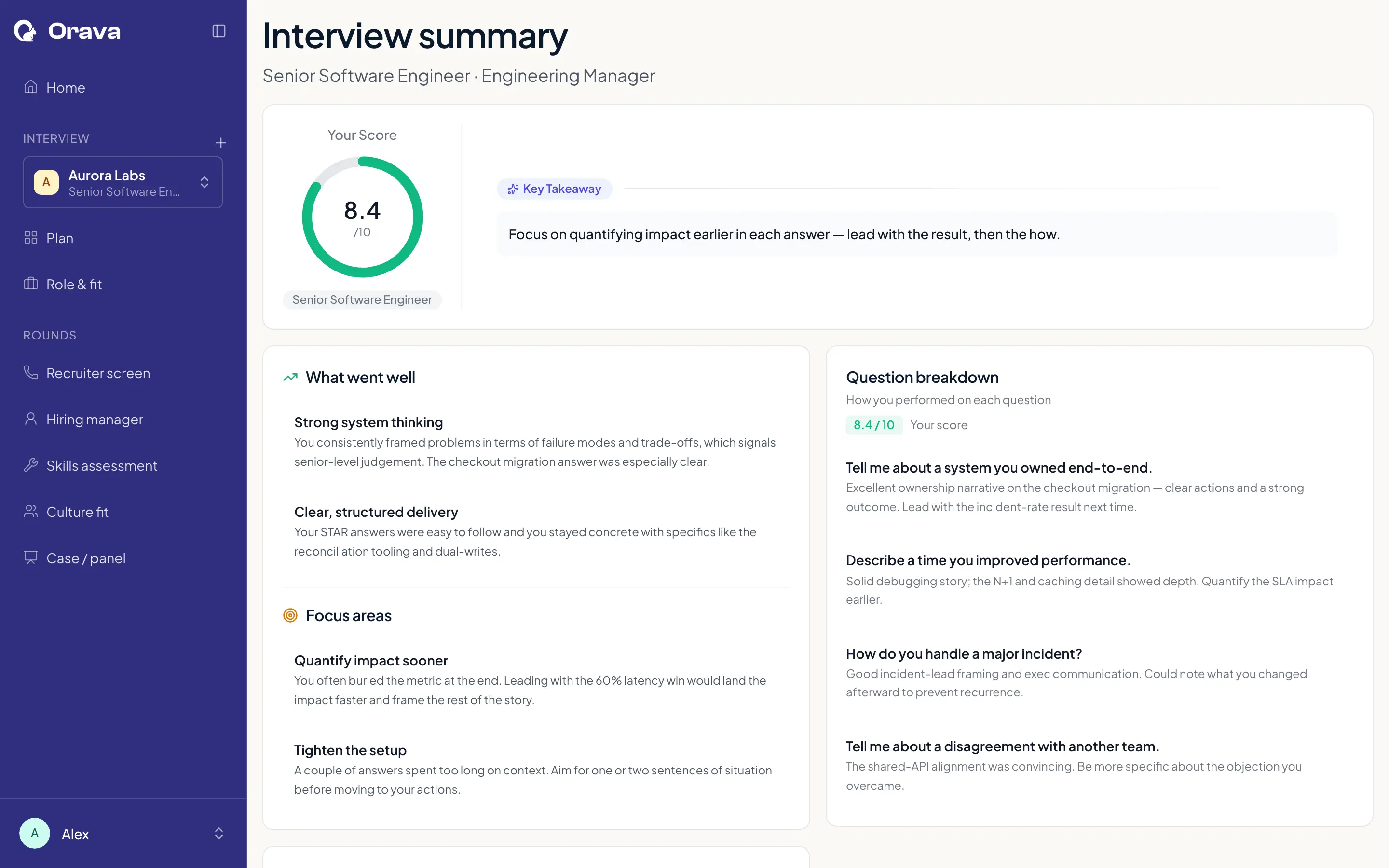
Preparation Tips for Netflix Data Scientist Interviews
- Master recommendation ranking metrics (NDCG, MAP, Recall@K) and how they relate to retention.
- Be fluent in experiment design: power, MDE, sequential testing risks, and guardrails.
- Prepare SQL patterns for window functions, partitioned ranking, and rolling date filters.
- Know cold‑start and hybrid recommendation strategies (content‑based + collaborative).
- Have a clear framework for diagnosing metric regressions (segments, seasonality, confounders).
- Practice data storytelling: concise visuals, trade‑offs, and a crisp recommendation.
- Understand bandits vs. A/B: when to use each, and platform implications.
- Map metrics to product levers: activation, engagement depth, and churn reduction.
- Show ownership: propose follow‑ups, not just findings; quantify expected impact.
- Study privacy, bias, and fairness considerations in large‑scale personalization.
Frequently Asked Questions - Netflix Data Scientist
Typical flow: recruiter screen → technical screen (SQL + experimentation/recsys) → onsite loop with case studies, product/analytics deep dives, ML/statistics, and behavioral culture fit. Some roles include a short modeling or SQL exercise.
SQL, Python or R, statistical inference, experimental design and analysis, recommendation/ranking methods, metrics like NDCG/MAP, and the ability to turn insights into product decisions. Experience with large‑scale data pipelines is a plus.
Common themes: improving homepage personalization, diagnosing a drop in engagement, designing robust A/B tests with guardrails, evaluating content valuation/forecasting, and prioritizing features with measurable member impact.
Not strictly required, but familiarity with streaming metrics (starts, completes, time watched), churn/retention drivers, and content lifecycle analytics helps you reason about trade‑offs quickly.
Netflix aims for top‑of‑market pay. Mid‑senior roles commonly include a high base salary with smaller equity components compared to peers. Exact numbers vary by level, location, and experience.
Expect probing on metric selection (primary vs guardrails), variance reduction (CUPED / stratification), power trade-offs, sequential testing risks, heterogeneous treatment effects, and interpreting conflicting metric movements. You should articulate when to stop an experiment early and how to validate external validity.
Diversity/novelty (intra-list diversity), discovery uplift, retention contribution, title completion ratio, early session abandonment, satisfaction proxies (downstreams like churn reduction). Show awareness of metric gaming and long-term engagement vs short-term click uplift.
High for personalization & product decisions: difference-in-differences for staggered rollouts, synthetic controls for content launches, instrumental variables for selection bias, uplift modeling for targeted messaging. Be ready to explain assumptions and failure modes.
Examples: diagnose drop in retention after UI change, design experiment for recommendations ranking, compute and interpret NDCG change, build causal approach for content valuation, propose cold-start strategy metrics, analyze multi-armed bandit trade-offs, segment churn drivers for new markets.
Applying for this role?
Paste the Netflix posting and your resume. See which requirements your resume already proves, and which answers to prepare first.
Compare my resume to this roleFree · no account needed